Organic Architecture · Est. 2010 · Los Angeles, CA

ARCHITECTOID

Learning Architecture for Life

FRANK LLOYD WRIGHT JOHN LAUTNER CONCRETE LOS ANGELES ABOUT CONTACT PRIVACY POLICY

Stressing the Post Tensioned Cables in a Monolithic Slab


Updated: February 22, 2026 — Technical breakdown of the hydraulic tensioning phase.

Once the monolithic concrete slab has reached its design strength (typically 3000 psi), the most dramatic phase of the engineering begins: Stressing.

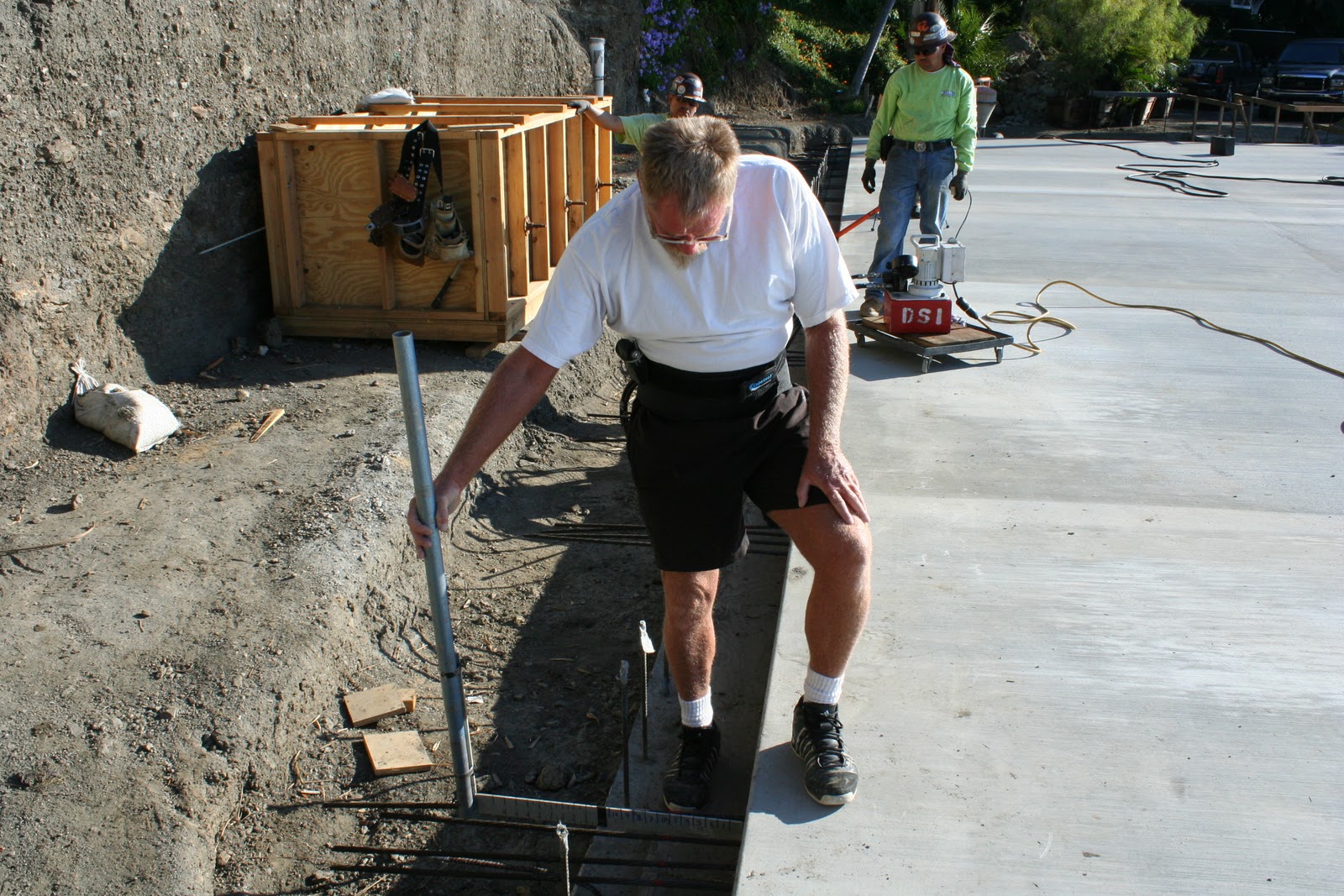
In these photographs from Nicholson Architects, we see the team operating the hydraulic stressing jacks on the perimeter of the Goldstein Project. This isn't just a final check; it is the moment the building becomes structurally "active."

Operating the Stressing Jack on the Post Tensioned Cables.

How the Stressing Jack Works

The jack is placed over the exposed ends of the internal steel cables (tendons). Using a high-pressure hydraulic pump and gage, the jack pulls the cables with thousands of pounds of force. As the cables stretch, they compress the concrete slab from the inside out.


Inserting the Stressing Jack onto a cable.

Why We "Pre-Load" the Architecture

This compression is what allows for the extreme, gravity-defying cantilevers seen in the finished Infinity Tennis Court. By putting the slab under constant tension, we essentially create a rigid "spring" that can support massive weights over a thin profile without sagging or cracking. Once the proper pressure is reached, the excess cable is cut and removed, and the anchor points are grouted for a seamless finish.

Stressing Jack extended to proper stressing pressure.

Inspecting the stressed length of the post tensioned cables.


Hydraulic Pump with gage for setting proper pressure to post tensioned cables.
Photographs from Nicholson Architects of the Goldstein Project.

Stressing the Post-Tensioned Cables - Video Walkthrough:


Comments